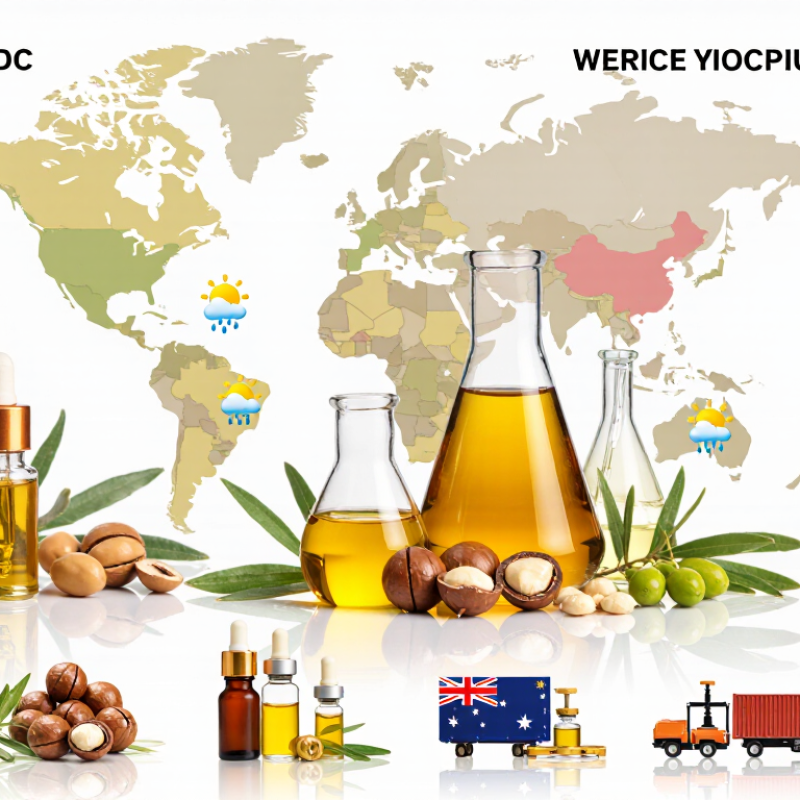
Sourcing Specialty Cosmetic Oils worldwide requires more than comparing prices or requesting attractive samples. It demands evidence, technical judgment, and patience. A supplier in Morocco may offer cold-pressed argan oil, while another in Australia may provide refined macadamia oil. Their climates, harvest timing, extraction methods, and storage conditions can change performance significantly.
Cosmetic chemist Perry Romanowski has repeatedly emphasized a practical principle: “Natural does not automatically mean better.” This warning matters when evaluating oils for facial serums, hair treatments, and sensitive-skin products. Buyers should request a current certificate of analysis, fatty-acid profile, peroxide value, acid value, allergen information, and microbiological results. Traceability should reach the farm, processor, and final warehouse. Organic or fair-trade claims also require credible certification, not attractive wording on a website.
Small details matter.
A reliable sourcing process includes supplier audits, retained samples, packaging checks, and accelerated stability testing. Dark glass, nitrogen flushing, and controlled temperatures may reduce oxidation during transportation. Yet no sourcing map is perfect. A certificate can be outdated, and a premium oil can still perform poorly after formulation. This is where experience becomes valuable. Teams should test every batch against agreed specifications, document deviations, and question unusually low prices. The strongest global strategy balances sensory quality, scientific data, ethical procurement, and supply continuity. It also leaves room for revision, because crop failures, freight delays, and changing consumer expectations can expose weaknesses that initial research missed.
How to Source Specialty Cosmetic Oils Worldwide?
A reliable oil specification begins with its exact INCI name, not a supplier’s marketing term. Specify the botanical source, plant part, extraction method, refining level, and country of origin. For example, cold-pressed seed oil differs from its deodorized or solvent-extracted version. Request the INCI name exactly as listed in recognized cosmetic ingredient databases. Small naming errors can affect customs documents, formulation records, and consumer disclosures.
ISO 16128 provides a practical framework for classifying natural and natural-origin ingredients. It also supports calculations for natural-origin content. However, ISO 16128 does not confirm safety, purity, sustainability, or allergen status. That limitation matters. A high natural-origin percentage can still describe an oxidized oil. Each purchase specification should include peroxide value, acid value, fatty acid profile, microbiological limits, and residual solvent requirements where relevant. Keep recent certificates of analysis and retain samples from every lot.
Demand for transparent documentation is growing with the cosmetics market. Cosmetics Europe reported approximately €104 billion in European retail sales during 2023, increasing pressure on suppliers to provide consistent ingredient evidence. Global sourcing also requires harvest-year details, traceability records, and storage conditions. Ask whether drums remained below the recommended temperature during transport. A beautiful certificate cannot repair poor logistics. Specifications may still be incomplete. Review them against the final formula, intended skin contact, and regional compliance requirements.
Sourcing specialty cosmetic oils worldwide requires more than comparing prices and sample appearance. Begin by checking whether each supplier follows ISO 22716 Good Manufacturing Practices. Request current certificates, production addresses, audit records, and documented quality procedures. The certificate alone is not enough. Confirm its scope, validity, and issuing organization.
A reliable supplier should provide a batch-specific Certificate of Analysis for every shipment. Review the lot number, production date, expiry or retest date, test methods, specifications, and actual results. For natural oils, examine odor, color, refractive index, acid value, peroxide value, and microbiological limits. Ask how the supplier controls pesticides, heavy metals, allergens, and possible adulteration. Keep approved samples for comparison.
Test before scaling. Send a small quantity to an independent laboratory when the oil is expensive or highly variable. Check packaging, tamper evidence, storage temperature, and transport conditions across borders. Traceability should connect the finished drum to raw materials, processing records, and release approval. In practice, documents may look complete while one critical result is missing. That is a warning. I have found that supplier communication also matters; slow, vague answers often predict difficult investigations later. No screening system is perfect. Recheck suppliers periodically, especially after formula changes, facility moves, or unusual batch results.
How to Source Specialty Cosmetic Oils Worldwide?
Specialty cosmetic oils require more than a supplier’s product name. A clear identity check begins with a representative sample and complete batch records. GC-MS can reveal characteristic volatile compounds and unexpected solvents. However, GC-MS results depend on the laboratory method and reference library. Ask for chromatograms, test conditions, and the analyst’s interpretation.
Fatty-acid profiling provides another practical checkpoint. It can distinguish oils with similar appearances but different compositions. Review oleic, linoleic, palmitic, and stearic acid levels against credible technical references. Unusual ratios may indicate blending, poor refining, or natural variation. Natural oils are not perfectly identical.
Small differences matter.
Oxidation values show whether an oil may already be deteriorating. Check peroxide value, anisidine value, and, where appropriate, the total oxidation value. Request test dates, storage conditions, and packaging details. Heat, light, oxygen, and long transport can change results before delivery. A fresh laboratory report is useful, but it is not absolute proof. Independent testing at receiving remains wise, especially for high-value oils. My own review process would benefit from stricter sampling records; one sealed bottle cannot represent an entire shipment. Compare documents across multiple batches, retain samples, and investigate results that do not align. Good sourcing combines laboratory evidence with traceable handling, not attractive claims.
Compare representative fatty-acid profiles with peroxide values before approving an oil lot. Fatty-acid patterns can support identity screening by GC-MS or GC-FID, while peroxide value indicates the current level of primary oxidation. Values are typical reference values from commonly reported fresh-oil ranges; actual results vary by cultivar, processing, storage, and lot.
Fatty acids are shown as approximate percentage of total fatty acids. Peroxide value is expressed as milliequivalents of active oxygen per kilogram of oil (meq O₂/kg). Atypical profiles or elevated oxidation values should trigger confirmatory testing and supplier documentation review.
How to Source Specialty Cosmetic Oils Worldwide?
Worldwide sourcing requires more than comparing price and origin. McKinsey & Company’s 2023 beauty report projects the global beauty market may reach 580 billion dollars by 2027. Cosmetics Europe reported European cosmetics and personal care sales above 96 billion euros in 2023. This scale increases regulatory exposure. For EU sales, confirm an EU Responsible Person, Product Information File, Cosmetic Product Safety Report, and CPNP notification under Regulation 1223/2009. The oil also needs correct INCI naming, traceability, contaminant testing, and batch records.
For U.S. distribution, review MoCRA 2022 obligations. Applicable facilities may need FDA registration and product listing. Serious adverse events require reporting within 15 business days. Keep complaint procedures active, not decorative. IFRA Standards should guide fragrance-related oils, especially concentration limits and product categories. An IFRA conformity certificate supports compliance, but it does not replace a complete safety assessment. A supplier file can look complete and still hide weak origin records. Do not guess.
Tips: Request a recent COA, allergen statement, pesticide and heavy-metal results, SDS, extraction method, country of origin, and stability data. Check whether documents match the exact batch. Ask for retained samples and independent testing when the oil has a strong odor, unusual color, or inconsistent viscosity. McKinsey’s data shows market opportunity, not automatic safety. That distinction matters. A perfect spreadsheet is still not proof. Recheck translated documents, because small wording errors can change an ingredient’s regulatory meaning.
| Sourcing Dimension | Oil Category or Origin | Key Quality Information to Verify | EU Requirements: Regulation (EC) No 1223/2009 | U.S. Requirements: MoCRA 2022 | IFRA Relevance |
|---|---|---|---|---|---|
| Fixed vegetable oils | Cold-pressed or refined oils such as jojoba, argan, sunflower, sesame, or olive oil | Botanical identity, plant part, extraction method, origin, fatty-acid profile, peroxide value, acid value, moisture, insoluble impurities, heavy metals, pesticide residues, and microbiological results. | The finished cosmetic product must be safe, supported by a Cosmetic Product Safety Report (CPSR), and manufactured according to good manufacturing practice. The oil must be correctly identified in the product information file (PIF). | The responsible person must maintain adequate safety substantiation for the finished cosmetic product. The oil supplier should provide records supporting identity, purity, traceability, and contaminant control. | Usually not directly subject to IFRA Standards when used only as a carrier or emollient. Any added fragrance or aromatic constituent must be assessed separately. |
| Essential oils | Steam-distilled, expressed, or otherwise extracted aromatic oils from leaves, flowers, peels, seeds, roots, or wood | Botanical name, chemotype where relevant, extraction method, chromatographic profile, allergen profile, adulteration screening, pesticide residues, residual solvents, and phototoxicity information where applicable. | Fragrance allergens above the applicable declaration thresholds must be declared on the label. Safety assessment should address sensitisation, phototoxicity, dermal exposure, and restrictions in relevant Annexes. | The finished product must have safety substantiation. Ingredient labeling and claims must be truthful and not misleading; fragrance allergens may need consideration under applicable labeling practices and product safety review. | IFRA Standards may restrict, prohibit, or limit certain fragrance materials by product category. A current supplier conformity document and intended-use category should be requested. |
| CO2 extracts and specialty botanical extracts | Supercritical carbon-dioxide extracts, oleoresins, and concentrated botanical fractions | Extraction solvent or process, carrier substances, residual solvent data, marker compounds, concentration ratio, botanical authentication, stability, and allergen or sensitizer information. | All components must be identified for the PIF and CPSR. Nanomaterial status must be assessed where applicable; ingredients meeting the legal definition of nanomaterial may trigger additional notification and labeling requirements. | Safety substantiation must cover the complete ingredient composition, including carriers and processing aids. Product listing and facility obligations apply to the finished cosmetic product and responsible parties, not simply to a raw-material shipment. | IFRA assessment is relevant when the extract contributes fragrance or contains restricted aromatic constituents. The supplier should identify naturally occurring constituents of regulatory concern. |
| Marine or animal-derived oils | Fish, algae, or other legally permitted animal-derived oils used as emollients or conditioning ingredients | Species or source identification, sustainability documentation, oxidation markers, contaminants such as dioxins and PCBs where relevant, allergens, microbiology, origin, and applicable animal-origin declarations. | The responsible person must verify safety, traceability, and compliance with ingredient restrictions. The PIF should contain specifications and supporting safety data for the complete raw material. | Safety substantiation and accurate ingredient information are required for the finished product. Additional import, animal-health, or environmental rules may apply depending on the material and origin. | Generally not an IFRA issue unless the material is used for fragrance or contains an aromatic fraction covered by an IFRA Standard. |
| Recycled or upcycled oils | Oils recovered or refined from food, agricultural, or processing by-products | Input-material history, purification steps, contaminant removal validation, batch traceability, PAHs, pesticides, heavy metals, residual solvents, microbiology, stability, and change-control records. | The same safety and documentation obligations apply as for other cosmetic ingredients. The PIF and CPSR should explain the manufacturing process and demonstrate that impurities are controlled. | The responsible person must maintain safety substantiation and records adequate to support the product’s safety. Supplier changes should be evaluated through documented quality and safety review. | IFRA requirements depend on the final composition and fragrance function, not on whether the oil is recycled or upcycled. |
| Supplier qualification | Any country or sourcing region | Legal entity details, manufacturing site, quality system, audit history, certificates of analysis, change-notification procedure, recall capability, minimum order quantity, lead time, and batch-retention policy. | Cosmetic manufacturing should follow good manufacturing practice. ISO 22716 is the harmonized reference standard commonly used to demonstrate cosmetic GMP compliance, although supplier certification alone does not replace the responsible person’s legal obligations. | MoCRA introduced facility registration and product-listing obligations for applicable U.S. cosmetic operations. Confirm which party is the U.S. responsible person and whether the facility has the required registration status. | For fragrance materials, request an IFRA conformity statement for the intended application, together with allergen and restricted-substance information. |
| Documentation package | Required before approval of a new oil | Current specification, certificate of analysis, safety data sheet where applicable, technical data sheet, allergen statement, GMO statement, origin statement, vegan or animal-origin statement where relevant, and traceability documents. | The responsible person may need the ingredient composition, purity data, toxicological information, exposure data, and manufacturing information for the CPSR and PIF. Product notification through the Cosmetic Products Notification Portal is required before EU market placement. | Maintain safety substantiation, adverse-event support records, and documentation needed for product listing and facility registration where applicable. Serious adverse events must be reported to the U.S. Food and Drug Administration within 15 business days after receipt of required information. | Obtain the relevant IFRA certificate or conformity statement for the exact intended use and concentration. IFRA documentation does not replace a complete cosmetic safety assessment. |
| Analytical testing | Release testing and periodic verification | Identity testing, GC-MS for volatile oils, HPLC where appropriate, fatty-acid profile, peroxide and anisidine values, acid value, refractive index, density, optical rotation where relevant, microbiology, and contaminant testing. | Testing should be risk-based and sufficient to support the CPSR, product stability, and specification compliance. Particular attention is needed for allergens, impurities, prohibited substances, and restricted ingredients. | MoCRA does not create one universal test panel for every oil. Testing should support reasonable safety substantiation and be appropriate to the product’s intended use, formulation, and exposure. | Analytical data can support identification of fragrance constituents and restricted substances, but IFRA conformity must be evaluated against the applicable product category and concentration. |
| Packaging and transport | Bulk drums, intermediate bulk containers, or smaller containers | Food- or cosmetic-compatible packaging, light and oxygen protection, liner compatibility, seal integrity, storage temperature, nitrogen blanketing where appropriate, and transport conditions that limit oxidation and contamination. | Packaging and storage conditions should preserve product safety and quality through the stated shelf life. The finished product packaging must meet EU labeling requirements, including responsible-person details and ingredient nomenclature. | The finished cosmetic label must contain required information, including an ingredient declaration and applicable responsible-person or business details. Packaging should not create a misleading impression or introduce contamination. | IFRA does not generally prescribe bulk-oil packaging. Packaging must nevertheless preserve the composition used to establish fragrance and safety conformity. |
| Claims and sustainability | Organic, natural, fair-trade, sustainably sourced, or carbon-related claims | Certification or verification scope, chain of custody, mass-balance method if used, audit frequency, origin evidence, and substantiation for environmental, ethical, or natural-origin claims. | Cosmetic claims must comply with the EU common criteria for cosmetic claims: legal compliance, truthfulness, evidential support, honesty, fairness, and informed decision-making. “Natural” or “organic” wording should be supported by objective evidence. | Claims must be truthful, not misleading, and supported by competent evidence. Environmental or sustainability claims should be specific and substantiated rather than based only on broad wording. | IFRA Standards address safe use of fragrance materials and do not certify organic, natural, fair-trade, or sustainability claims. |
| Final compliance checkpoint | Before commercial launch in each target market | Confirm approved supplier, final formula, batch specification, stability results, labeling, claims evidence, traceability, complaint handling, and recall procedure. | Appoint an EU responsible person, complete the CPSR and PIF, verify GMP, complete required product notification, and ensure compliant labeling before placing the cosmetic product on the EU market. | Confirm the U.S. responsible person, facility registration and product-listing requirements where applicable, safety substantiation, label compliance, adverse-event procedures, and recordkeeping. | Confirm the correct IFRA product category, maximum permitted concentration where applicable, current conformity documentation, and separate assessment of all fragrance allergens and restricted constituents. |

How to Source Specialty Cosmetic Oils Worldwide?
Sourcing specialty cosmetic oils requires more than comparing prices per kilogram. Start with the MOQ, because a low price may hide excess inventory and oxidation risk. Ask suppliers for harvest dates, batch COAs, origin records, and storage conditions. Lead times also need careful testing. A supplier may quote ten days for production, but port congestion can add three weeks.
Incoterms shape your real buying cost. EXW may leave export handling, freight, and insurance entirely with you. FOB usually gives clearer control at the shipping port. CIF can simplify transport, but confirm when risk transfers and which destination charges remain unpaid.
Your landed cost should include oil, packaging, freight, insurance, duties, customs brokerage, testing, and local delivery. Certification claims deserve evidence. Check organic documentation, allergen statements, contaminant testing, and traceability against your target market’s rules.
Tips: Request two quotations: one for a trial MOQ and one for annual volume. Compare the cost per usable kilogram, not the invoice price. Keep a small reserve for delays. A spreadsheet helps, but it can still miss currency changes or demurrage. That weakness matters.
Review samples in realistic packaging and temperature conditions. Record scent, color, viscosity, and rancidity after storage.
Specialty oils can vary between harvests, even with the same specification. Build quality tolerances into the purchase agreement. Do not accept vague promises about certification or delivery. Written evidence is safer.
A modestly higher landed cost may protect production continuity better than a cheap, uncertain shipment.